
Work-Life Balance in Healthcare: Caring for Yourself to Care for Others
Published February 2, 2025
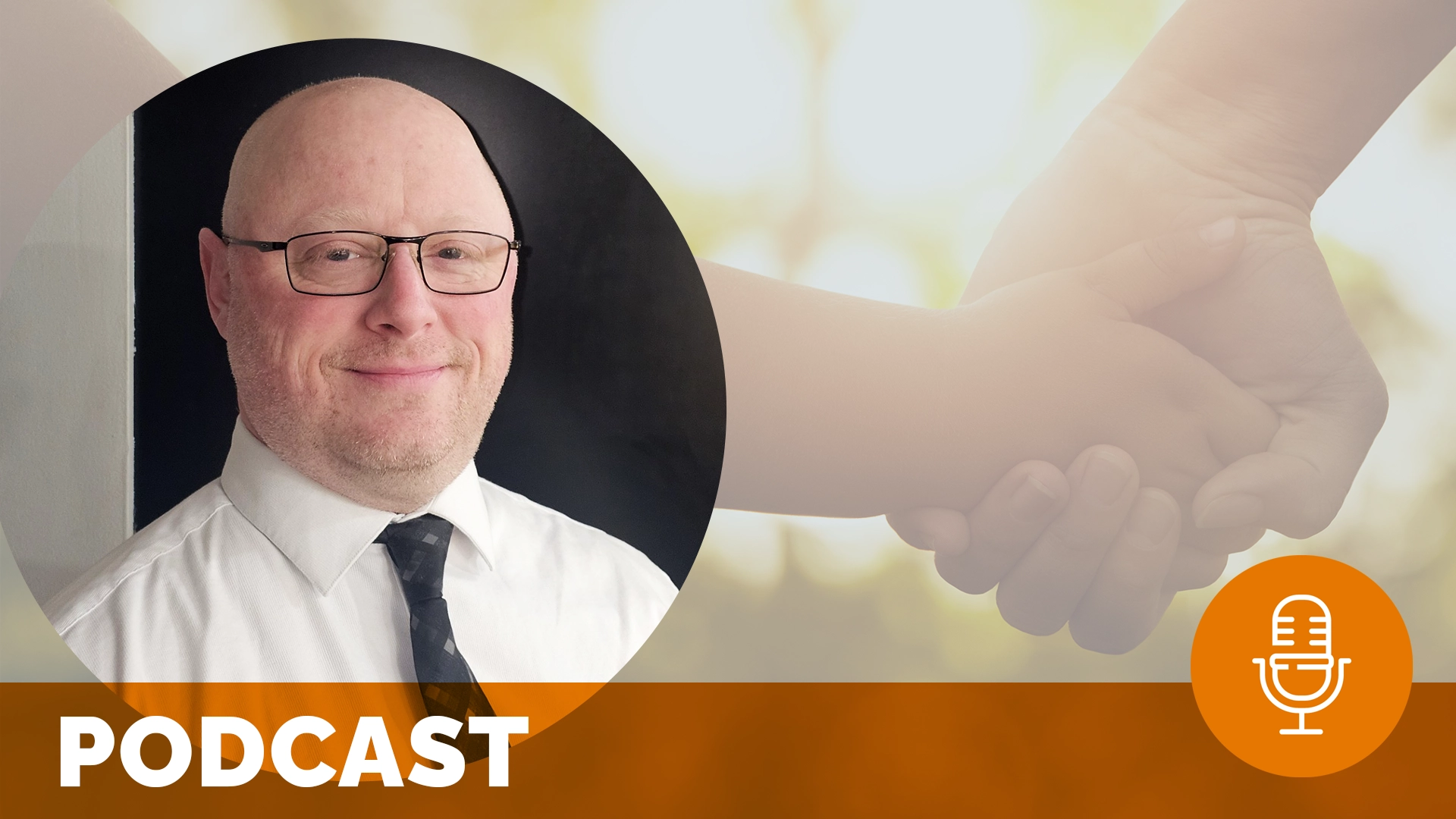
Achieving work-life balance is essential for overall well-being, especially in healthcare. Join us as Robert Cote, a patient advocate for the VA, shares his personal journey through imbalance and the steps he took to restore stability. Discover the warning signs, practical strategies for self-care, and the importance of setting boundaries. Cote’s powerful message reminds us: caring for yourself is the first step in being there for others.
Transcript
00:01 Welcome to The Beryl Institute's To Care is Human podcast series. You're listening to Humans in Healthcare, where we spotlight powerful stories from the people who provide and receive care. By sharing the experiences of those on the front lines, we are transforming the human experience in healthcare. Hello and welcome to another To Care is Human podcast. I'm Terry Ibsen, director
00:29 of content at The Beryl Institute. For this edition of Humans in Healthcare, I'm delighted to have the opportunity to talk with Robert Cote of the U.S. Department of Veterans Affairs. Robert is a patient advocate for the VA serving Central Western Massachusetts. Welcome to the podcast, Robert. Thank you for being
00:54 with us today. Would you like to take a moment and say hello to our listeners? Of course. Thank you for having me, Terry. Hello to all the listeners out there. My
01:03 name is Rob Cote. I am a patient advocate for the VA Central Western Massachusetts VA Healthcare Center. I have been a patient advocate since February 26th of 2022 and absolutely love this job. Thank you for that introduction, Robert. Now, take a moment and share your journey to becoming a
01:22 patient advocate for the VA. It's been a long one coming. I joined the military in 2000 to 2008. I was a firefighter in the Air National Guard. Got injured after
01:35 9-11, so I couldn't wear the uniform anymore, but I was a federal firefighter from 2006 to 2018. Unfortunately, received more injuries in the line of duty. My duty to the, you know, the government and everything like that, in my mind, wasn't over yet. So, I joined the VA in 2018. I became a scanner, scanning documents into
01:58 medical records. Wasn't where I wanted to be. So, a year later, I applied and became an enrollment specialist. Did that for two and a half years face-to-face with Veterans Fantastic. And then I was blessed in February 26th of 2022 with
02:12 being hired as a patient advocate. I've been that ever since and absolutely love the position. What a journey. Thank you for sharing that. Today, we're going to
02:21 talk about work-life balance, a topic that seemed to be a priority for professionals across many fields to maintain health and well-being. And that's especially true in health care. With the hectic nature of health care, I'm sure a lot of people out there are struggling with finding this thing called work-life balance. Robert, can you please explain what work-life balance is and how you became an expert at it? Work-life balance is essential for any
02:56 position in any job out there, but in high-stress jobs such as patient advocacy and health care in general, it's imperative that we have that balance. As to what work-life balance is, it's exactly what it sounds like. We're on almost like a teetering board of balancing our work, our professional career, and our home life, whether it's family, friends, hobbies. When we're in the center, we're perfect. We work fantastically, but when it starts getting
03:28 to one end or the other, stress gets to us and everything like that. It can really ruin our lives. As to how I became an expert, it almost ruined mine doing firefighting, very strenuous, and I would actually bring that stress home. I didn't see it at first, but I'd start snapping at my family, almost lost my marriage until my wife was very gracious enough to point out that I wasn't acting the way I should be and started pointing out what changes I was happening. I looked
04:00 into it, realized, did a little research on what's going on, found work-life balance, found that what might work for me doesn't work for everybody else. We have to find our own part of it. I studied it. I taught some classes as a firefighter to get all of us back into it. My marriage improved, my health
04:21 improved, my mental outlook on life improved, because I was able to be in where I needed to be and not let everything weigh down on us. Like healthcare workers, we do, especially just coming out of the pandemic a few years ago. You appreciate your transparency in sharing your personal story, and also reminding us that this work-life balance thing is very individual. Everybody is different and unique. Why is balance so important to you in your role, Robert, as
04:57 a patient advocate at the VA? Another great question. As being a patient advocate, we, like doctors, very rarely see our veterans or our patients on their best days, when they're in their happiest of moods. They come in with a lot of stress, and they're relying on us to be able to help alleviate it, not make it worse, and to help them. If our balance as patient advocates is off, if we're having a bad
05:27 day because of stress we're dealing, we can't give our veterans, our patients, the attention they need. We can't give them undivided attention. We can't work to our best ability, because some of the cases, they're really in depth, and we have to really try to find what the actual problem is. If we're off, we may snap at the veteran. That's never a good thing. That's going to have them have
05:55 less confidence in our job. If we can keep our life balance where it needs to be, close to the center, we can do that onto the veteran, and they have more confidence that we're actually here to help them, that we are competent in our job, and that we can help them. I prefer to have them leaving with a joke, shaking hands, slapping each other on the back. But if we're not right, and they can sense it, They're not going to have confidence leaving, and they're going to start questioning, one, our position, two, whichever health care facility they're in, and are they really here for us? And that's the last thing we want because we are there for every single one of our patients.
06:36 Being on the front lines like you are as a patient advocate, you really have to keep your emotions in check, it sounds like. It's really critical to have that self-awareness, so I applaud you for doing that every day for the veterans that you're serving. Change direction a little bit in our conversation, and let's talk about the many passions that you have in your life. You yourself are a great example of someone who has had to work hard at balancing multiple areas within your professional work. Tell us about your passions
07:14 and how you manage them all when being pulled in so many directions. Terry, where do we start with this one? You're correct. I am pulled in a lot of directions, and I put myself into it. As I stated, I'm married. I've been married for 23 years,
07:29 been with my wife for 31. We have an 18-year-old son who just started college, a 16-year-old daughter who is a junior in high school. When they were younger, I'd be coaching their soccer teams, their baseball teams, being a father, being a husband. On top of all of that, in 2012, I became a master mason. For those that don't know what a master
07:52 mason is, we are the largest philanthropy in the world. Some of the people that everybody knows that used to be masons or are masons, Michael Jordan, Walt Disney, Babe Ruth, multiple U.S. presidents. Most likely, you know who a mason is. After that, in 2014, I joined the Malhaas Shriners.
08:13 What Shriners do is they raise money for children's hospitals, burn centers. The family never has to pay a penny out of pocket. All they have to do is if they have insurance, the insurance pays the co-pay, but the patient never pays anything. They don't need any more stress on their plate.
08:32 That was in 2014. 2018, I became, that same year, sorry, in 2014, I also joined the Malhaas Shrine Clowns. So I put makeup on my face to make kids laugh, forget their stress that they're going through. Four years later, I became chief clown, so I ran the whole unit. That year, I did about 60 to 70
08:52 extra gigs where we went out and clowned around circuses, things like that, all to make the kids laugh. In 2018, I continued on with my masonic career. In 22, I joined the Malhaas Legion of Honor. They are the ones that at the beginning of the parades, they carry the military flags and the state flags. We are all current or former military members or EMS staff, firefighters, police.
09:19 2023, I joined what's called Vila Grotto, which is also another masonic organization, except for this organization. We raise money for special need kids to get free dental care. In 2024, I was nominated and elected as chief justice, which is basically the vice president. I'll be that for two years. And in 26, 27, I'll be the monarch or the president, and I'll run
09:44 that organization for two years. On top of that, this year, I joined the 501st Legion, which is a Star Wars troop. So if anyone's ever been out there and I saw Star Wars, clone troopers, stormtroopers, Darth Vader, even at different events, we raise money for Make-A-Wish. These are all on our time. We donate our time, all the costumes we pay out of pocket. We don't make
10:11 any money for them. For the clowns, which I'm still doing, my clown name is Mismatch. My daughter, when she was six years old, looked at me, looked me up and down like a six-year-old does and says, your clothes can't match. I'm going to call you Mismatch. I've been doing that ever since
10:29 and still doing that. I'm still a husband. I'm still a father to two wonderful kids. I'm a VA employee to all the veterans here as well. The greatest thing about all of this is
10:41 when I give of myself, I'm relieving that stress because I can see the happiness on the kids' faces and the adults, as they say, young and old, of all ages. Giving of oneself is a main point of mine and my balance. So all my stress from work goes straight out when I'm entertaining everybody else. That's all the free time I have.
11:11 Yeah, what a beautiful story and what a remarkable journey. I'm just inspired by how you find joy in giving back to others. By doing that, you are finding work-life balance. If our listeners take nothing away from our conversation today, that one key point, giving back to others brings balance, is the key thing. So I appreciate you staying on top
11:42 of your balancing act because you have many irons in the fire there. So thank you, Robert, for all of that. At the Institute, we often say that in healthcare, we can't give the best care to our patients until we take care of ourselves first. What are all the elements that feed into work-life balance? The main elements that we're going to be dealing with would be,
12:12 most importantly, stress and time management. Everybody, I don't have time. I don't have time. We have to manage that. You have to be flexible with everything you're doing. With what I do,
12:22 if I didn't have flexibility, I'd lose my mind. I wouldn't be able to do anything. You have to be able to handle change when it comes because change will come. Times, you're not going to know it's coming. Leisure time management, it's not only work
12:37 time management, but if you have families, you have to make time for them. There's many others, but those are the fundamentals. They should know ones that are key to keep the balance there. Absolutely.
12:50 So, so stress and time management, flexibility and autonomy, the ability to handle change, and then leisure time management. Correct. Awesome. Truly important to balance.
13:04 Tell us how having work-life balance can benefit us. There's, there's many benefits and I I've stated earlier, one, your health. If we've ever felt, I just, I feel off today. Your balance is off.
13:19 Something's going on. Your mental health is severely impacted. If you're under a lot of stress, you can't think, you can't rationalize. You're just, I always picture it when I'm training this face-to-face.
13:32 It's like one of those old rubber bouncy balls. You take it, you open up a door in a small room, throw it in there as hard as you can and close it. That's how we are. If we can't manage everything.
13:43 We're trying to do everything at once. And we just can't, we have to live in the present when I'm training people or educating them on it. We can't do anything about tomorrow. We can't do anything about yesterday.
13:56 We have to worry about the veteran or patient that's in front of us right now. They need our help the most right this moment. If we're thinking about yesterday, if we're thinking about tomorrow, or even if we're thinking about dinner, I'm not giving that patient my a hundred percent undivided attention. And that, that becomes a major problem.
14:19 And if we can do all of that, it's not easy. We become a very well-rounded individual and we can become much more successful as well in our personal life and in their career. Yes. Those are all great benefits to think about, but what about the risks, Robert?
14:38 If we don't manage work-life balance well, and what is the ultimate risk? If we don't manage our balance well, both of our physical and mental. So if we think about it, we're already on a teetering board doing our personal life and our work. But now on that teetering board, we also have our mental and physical.
15:00 We have to keep those. And as I stated earlier, when mine was off and it was way off, I almost destroyed my marriage. I wouldn't have had my beautiful kids that I have. And I love today.
15:09 So I'm, I'm fortunate that I was able to do it. Your, your, the performance at work, your performance on your everyday outside of work, it's not going to be where it should be. Um, as to what the ultimate risk is, we are healthcare professionals. We understand what and how important mental health is to everybody.
15:32 The physical aspects, again, the, you know, the malaise, the feeling run down, just not sure what's going on. Those can all compound on other situations. Once it starts getting to your mental health, the absolute ultimate risk is what affects 22 veterans every day. And that's suicide.
15:55 They feel that they can't manage their stress. Their life is getting out of control. They just, they are that bouncy ball. And that is when they need us to take a hold and say, everything's going to be okay.
16:08 We're going to get you there. So we need to manage it within ourselves because once our mental health goes, unfortunately, as we see in the world today, a lot more problems, not only health wise, but now you're looking at legal issues, law enforcement issues. All these different things just compound and it's, it can lead to a very, very bad day. What are the signs of a poor work-life balance?
16:37 I mean, how do we know when we're out of balance? Like I've said, a couple of times, you're going to feel that I feel off today. You know, I don't know why I can't put my finger on it, but I feel off regarding work. You can't stop thinking about work, even when you're not at work.
16:56 It's part of the position we're in as patient advocates. When I took this position over, I had the person that I replaced who moved on to another position ask, you know, do you look at your phone on Saturdays? Do you answer your emails? Not at all.
17:10 Well, how, why don't you, they're, they need your help. They're going to need my help on Monday as well. I will take care of it. Then I got to take care of me right now.
17:19 Um, our relationships can suffer both professional and personal. We can snap at coworkers, supervisors, loved ones. Like I said, with myself, I took my frustrations out at home and that's one of the worst things I have ever done that I'm not happy with. But by learning all of this, I've been able to manage it, which is fantastic.
17:42 We talked about the aches and pains being off. You have a lack of motivation to do anything. It's one of those, yeah, all of this needs done. I got to clean out the gutters.
17:52 I have to rake the lawn, but I'm just going to lay here for a while. That's a big sign that everything is off. Uh, when you start paying for things that you usually don't, if you find joy in washing your car, when it's not raining and you find joy washing your car, but all of a sudden you're paying somebody else to do it for you or to do the groceries for you or something that you've always did before, that's a sign that your work-life balance might be off, uh, believe it or not mowing your yard can be very therapeutic. It gets you into almost like a Zen like trance.
18:25 It's the same thing over and over again. Um, another risk that we find is if you were feeling this way, you, you have to. Think about, am I taking time off to take care of me? You have to take the time off and work's going to be there.
18:45 You know, as, as I tell everybody, I can't take today off because I have to do the work, but if you get sick and have to take a week off, you've just added four more days onto it. Uh, we know when we're out of balance due to what we say, how we do things and how we feel when we're out of balance, more irritable, as I, as I've stated before, we don't want to. and time with family and friends. That is a major red flag right there. If you're doing
19:14 something that you usually don't do, or you're doing something that you usually don't do, that is a major red flag. And those are, those are the different ways of knowing if we're out of balance. Yes, yes. Well, thank you for reminding us again what those signals are. So, so important.
19:32 Going back to health care, depending on where one serves in health care, the environment can be very fast-paced and chaotic. So what are the simple steps a health care professional can apply to their daily work routine to reduce stress and those feelings of burnout? The biggest statement I always hear from health care professionals is, I don't have time for lunch. And again, it's that time management that comes in. You have to make
20:09 time. For myself, I'll bring a book, I'll go out somewhere, I'll have lunch, and I'll read. I'm away from my desk, and I definitely recommend being away from your desk. If you're at your desk, we all know someone's going to see you, you're working, they're going to knock on your door. You're going to stop working. Go for a walk. If it's a nice day
20:30 out, go for a walk around your campus of the medical facility, wherever you are. If it's not a nice day out, and you have different floors, like my facility, I have three different floors. I'll walk the floors just to get away from the desk, to take time to think, do what I need to do to bring me back. Even if it's not your break time or your lunchtime, if you feel that you're starting to not feel yourself, take a five-minute break. Get up,
21:00 re-situate yourself by going for a walk, go wash your hands, go get a drink of water, do something that gets you out of what you were doing. That might be what was bringing you out. If you don't like to read, bring something that you do like to do. Read a book, knit, bring something that brings you joy. Do puzzles at lunch. Your lunchtime is exactly
21:22 that. It's your lunchtime. Enjoy it. Bring you back to where you were before, so you can finish the rest of the day at optimal levels.
21:31 Yes. I love that. Those things are so simple to do. Reading a book, walking away from your desk, go get a drink of water, take a walk. Simple things, and they don't cost anything.
21:44 Correct. It comes back to that, and we are very frustrating with this, and we're stubborn as healthcare workers. I don't have time. That's the biggest thing I always hear, and that's where I stress time management. You have to make time, because if you don't take
21:59 time for yourself, you can't make time for anybody else. Robert, as we wrap up our conversation today, can you share that one thing that our listeners can do to improve their well-being through the lens of work-life balance? Actually, if I may, I'd like to give you two that I think are very important. When you are not working, please put your phone away, like I stated earlier, and put your emails away. This is your time. Give yourself time to unwind. Give yourself time to enjoy what
22:37 you do outside of work. That is how we have to unwind. The other things are if you include time off. I know a lot of people in healthcare, I can't take time off. The other people are
22:52 going to be overworked, or I'm not going to be there to do my job. What I'll do is I'll take a Friday off, or I'll take a Monday off if I feel I'm starting to get off. Get a three-day weekend. Do something, relax, come back, refresh that very next workday, and you're going to be in a better mind, better physical spirits to help everybody. If we can just
23:17 take that one day, you're going to see it improve so much more with your outlook on life, your mental prowess, and your physical as well. The work will be there when we return, and if we don't take it off, we're going to get sick, or we're going to get even worse. Take care of yourself so you can take care of your family. That's the model I always live by. If I can't take care of me, I'm not going to be there for my family, and I want
23:41 to be. I just wish to end this part with a quote I saw from Michael J. Fox, if I may. Michael stated that, which I feel is the nucleus of the work-life balance and why we should maintain it. He stated the following, family is not an important thing. It's everything.
24:04 There's always going to be jobs around. There's always going to be work to be had, but you usually only have one family. Your friends, your nucleus, you need to be there for them. If you're no good to yourself due to all the stress, you're going to be no good for them.
24:21 I ask every listener out there, as I do everybody I come in contact with, please take care of yourself and each other. We are a family in the healthcare, no matter if I'm in Massachusetts and someone's living in California. We're all family in the same struggle. If you see someone who is out of balance and you feel is out of balance, talk to them before it gets too late for them and it gets out of balance for them. Definitely talk to them.
24:47 What a wonderful way to end our conversation today. Looking after others. It sounds like you have a lifetime of that, looking after others, making sure people are okay. It's just so beautiful. We hear a lot in our society today, if you see something, say something.
25:04 I think that applies here. If you see somebody that looks off, reach out to them. It might be life-changing. It could be. You never know what they're going through or how far down that stress tunnel
25:17 they are. You could be their last line of help. Thank you, Robert, for sharing your personal experience with managing work-life balance, even though you said you're not an expert. I think you are.
25:31 Really, we appreciate learning about the signs and the symptoms of burnout, and thank you for giving us those action steps to mitigate and correct an imbalance. Being a patient advocate, I'm sure, is such a challenging role, and we at The Beryl Institute sincerely appreciate all you are doing at the VA to care for our veterans and ensuring that their needs are met. Would you like to share any final remarks with our listeners today as we wrap up? I just want to thank you for your time with this.
26:08 I appreciate you giving light to something that's very dear to my heart, and that is important to not only healthcare, not only patient advocates, but everybody nowadays. If you just look around, you don't have to go to work to feel stress. Stress is all around us, and if you understand the signs and symptoms of what's going on and you know how to mitigate them, you can live a much happier life and be there for your friends and family and yourself. So I thank you for giving me this platform.
26:39 Well, thank you, Robert, mismatch, Coté, for joining us today, and thank you to our listeners who joined us for this edition of To Care is Human. We will continue to bring you content from thought leaders from across our patient experience community and throughout healthcare to share their incredible stories of dedication and commitment to transforming the human experience in healthcare. Thank you for tuning in. You've been listening to Humans in Healthcare, a part of the Beryl Institute's To Care is Human podcast series, where we strive to elevate the human experience through the stories of those who give and receive care.
27:26 Don't forget to subscribe, share, and leave a review to help us continue this important conversation.


Related content
-
Infrastructure & Governance | Staff & Provider Engagement
Reducing LWBS Through Operational Excellence in the ED
Published June 16, 2026

Explore how a multidisciplinary team improved Emergency Department flow, communication, and patient experience. By addressing inefficiencies through collaborative redesign, the initiative achieved a sustained drop in “left without being seen” (LWBS) and better patient feedback. This webinar offers data-driven, replicable methods to optimize operations and enhance the ED experience for both staff and patients. Speakers:
Learn more -
Staff & Provider Engagement
Spiritual Care Connection Call – Looking Ahead to Spiritual Care Week
Published September 9, 2026

Spiritual Care Week, celebrated October 18-24, 2026, offers an opportunity to recognize and celebrate the vital contributions of chaplains and spiritual care providers across healthcare and community settings. Join the Spiritual Care Workgroup for a connection call as we look ahead and prepare for this celebration, reflecting on the impact of spiritual care, sharing stories
Learn more -
Staff & Provider Engagement
Reframing Physician Perceptions of Patient Experience: A Physician’s Perspective
Published May 21, 2026

This PX Learning Bite features physician leader Amit Singh, M.D., of Cook Children’s Medical Center, sharing a powerful perspective on why patient experience is not separate from clinical care, but fundamental to better outcomes, safety, trust, and healing relationships. Drawing from key themes in From Myths to Truths: Reframing Physician Perceptions of Patient Experience, this
Learn more


