
Enhancing Patient Experience: A Night Shift ER Doctor’s Passion Project
Published October 7, 2024
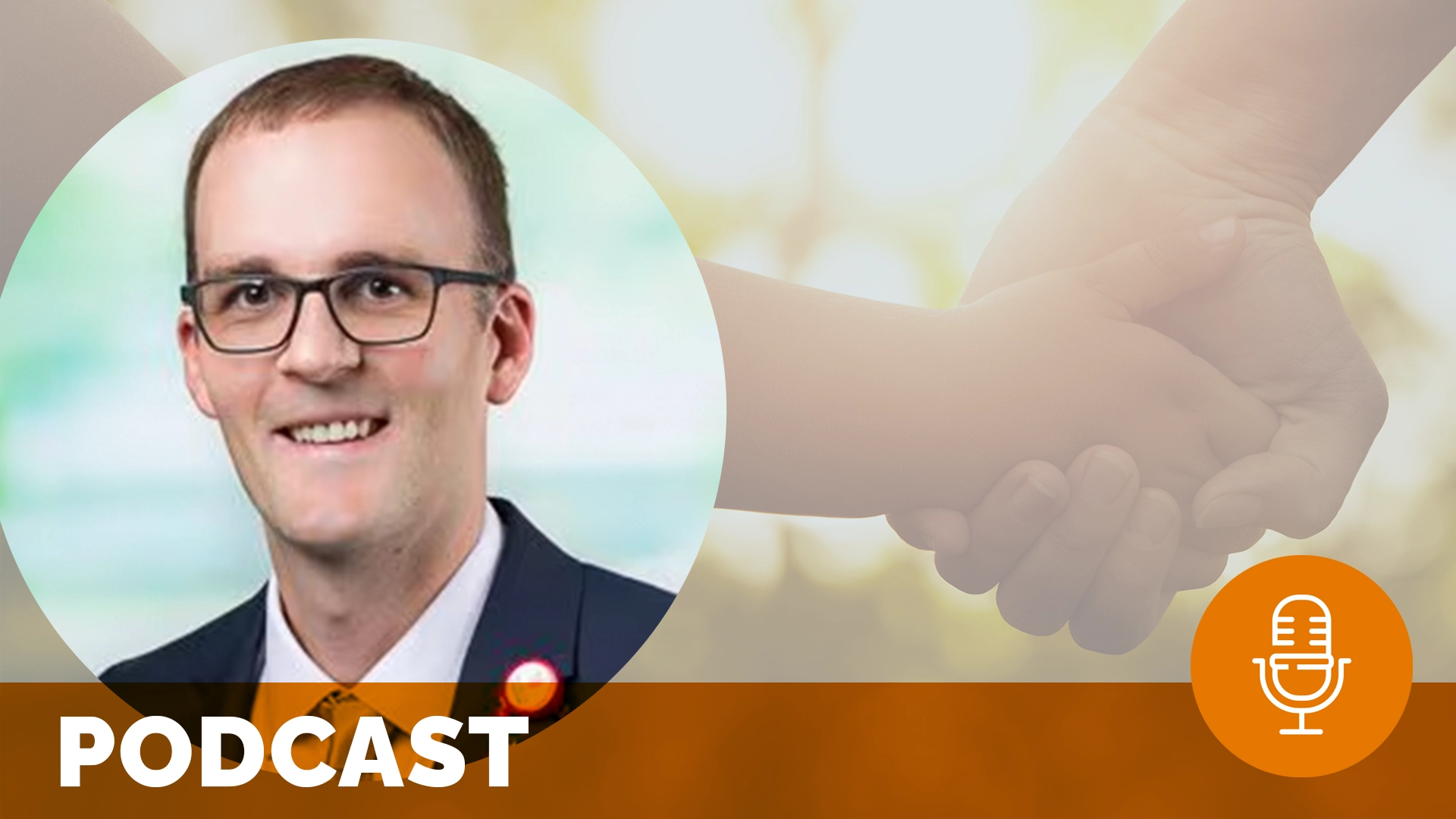
Dr. Donald Wickline of Cone Health, drawing from his experience as a night shift emergency room physician, explores the art and science of communication from a staff/provider engagement perspective. He highlights Cone Health’s C.U.R.O. communication model as a crucial framework for navigating sensitive and critical conversations with patients. This model provides physicians, including Dr. Wickline, with essential support in the high-pressure environment of healthcare.
Transcript
00:01 Welcome to The Beryl Institute's To Care is Human podcast series. You're listening to Humans in Healthcare, where we spotlight powerful stories from the people who provide and receive care. By sharing the experiences of those on the front lines, we are transforming the human experience in healthcare. Hello and welcome to another edition of our To Care is Human podcast. I'm Terry
00:29 Ibsen, Director of Content at The Beryl Institute. I'm excited to be here to host my very first podcast and so grateful to have the opportunity to talk today with my new friend from Cone Health, Dr. Donald Wickline. I say he's my new friend because we just met in April at our ELEVATE PX conference. He was a first
00:54 timer and I was so struck by his enthusiasm for patient experience and his interest in transforming the human experience in healthcare. Dr. Wickline, welcome. Please take a moment and say hello and tell us about yourself.
01:10 Well, thanks for that introduction, Terry. Hello everybody. My name is Donnie Wickline. I'm an ER physician in Greensboro, North Carolina. I work at Cone Health, which is
01:20 a multi-hospital system in Greensboro, other Greensboro region. I've been here now for 15 years, but over the past several years, one of my passion projects has been patient experience. And at this point, I've kind of worked my way up into medical director patient experience within the Cone Health system, which works along the lines of being a liaison between the medical groups and the system in terms of finding ways for providers to get more connected to their patients and whatever way I can help them with. So I've been really excited about that work. I was really excited about attending the Beryl Institute's
01:53 Elevate conference in Denver. It was a wonderful time. I met a lot of great people, have made some great connections, including Terry here, and I was happy to come and chat. Thank you for that introduction, Dr. Wickline. And I love
02:06 that phrase, passion project. Let's move on to our podcast topic, staff and provider engagement, which is one of the lenses of our experience framework. For our new listeners, the framework outlines eight strategies that are critical to any experience effort to transform human experience. The staff and provider lens looks at how we can create positive experiences for those delivering care and those supporting it. So Dr. Wickline, we all know that
02:39 healthcare staff deliver better care to their patients if they feel cared for themselves. My first question for you today, you mentioned you work closely with patient experience teams. What specific actions are you and your PX leaders taking to foster health and well-being of staff and providers at Cone Health? And how do you see these actions impacting experience? I'll first
03:03 start with the staff and the team that I work with the patient experience. So I'm the only physician that technically works with our team. We have several senior patient experience managers who are wonderful, as well as a data analyst, as well as our executive director, Shelly Barber. And so we're very closely aligned with each other. We meet often either as a group or individually, one-on-one,
03:27 working on various projects. And so in terms of their well-being, I think our closeness and just being able to be open and honest with each other and to know each other well enough to when we need to have, you know, give each other a break or take on a project for someone else to kind of help them regroup. This is very hard work, especially for our managers. They are going into a variety of hospitals, different cultures, different areas, dealing with angry patients at times, dealing with angry providers and angry staff at times as well. And so that
03:57 can be very taxing on them. So I think we have done a good job as a staff of just knowing when to step away, know when to step in for our colleagues, and just being an open and honest ear. I'm always willing as a provider, since I'm sort of working both roles, to kind of give them sort of a bird's-eye view or an inside view of what maybe physicians and providers would want to hear. And so I think being able to give them that as well kind of helps ease their transition.
04:24 But I think just as a team, I think we've done a really good job of supporting each other as we help this system and their patient experience and human experience. And in terms of providers, you know, as a physician, which, you know, I still work in the emergency department, I think just being open and honest and allowing providers to, you know, to get back to what they want to do, which is they want to just help patients, right? That's why we went into this in the first place. We didn't go into medicine to fill out insurance claims or, you know, battle with insurance companies. We went into medicine to help
04:59 people, right? So what can we do to help those providers get back to that? Whether that's, you know, give them the tools they need to interact with their patients on a more human level, encourage them to really use empathic responses when they're seeing their patients, or just to be human with their patients, right? If their patients are struggling with an illness or, you know, a diagnosis that could be terminal, just being there with them and just, you know, telling them it's okay to be human in those moments. And so I think the more we can do to get
05:26 providers closer to their patients, away from computers and away from billing and insurance companies, I think that's going to help their well-being overall. Also fundamental to positive experience for staff is reaffirming a connection to meaning and purpose. And, you know, sometimes this requires support structures and interventions that could alleviate the pressures contributing to staff burnout, especially for physicians. So how can health care systems better support physicians to mitigate burnout and provide positive reminders to physicians of their why? Why they went into medicine. That is a topic that comes
06:09 up a lot. One area, at least in terms of the teaching we do, and I'll talk more about our conversation model later on, but there is a part of it where we talk about the importance of compassion. And it's compassion, maybe something that can help burnout, right? So if we are having compassionate interactions with our patients, that's going to make us feel better, honestly, because we're helping someone else. And so that, if you feel better about yourself and feel
06:33 better about your job, you're much less likely to feel that burnout fatigue, right? As days goes on, you're just trying to trudging through patient after patient. If you're making those legitimate interactions, I do think those can really help that. Other thing health systems can do is just meet physicians where they are, which sounds somewhat cliched, but I actually see that in person. One of our, he's not involved in patient experience, but I work with him
06:57 on other projects. One of our physician leaders in our system just goes to groups and just says, hey, here's what we're finding. We have done some surveys on providers and burnout. I am here to listen to see what you guys need. Do you need more help with Epic? Do you need more help with staffing? What is
07:13 it that you feel needs to make you a better provider and to feel less on your plate? And so I've seen him do that with our group in the ER. I just saw him yesterday go to another hospital's group and talk to them about it and just being right there. I mean, providers don't want more emails, right? They don't want, they
07:30 don't necessarily need more yoga classes, but what they need is someone to come and talk to them and ask them what they need because every situation is different, right? One clinic could be different than another clinic and one inpatient ward could be different than another hospital's inpatient ward. And so everybody has their own unique stressors that are contributing to their daily fatigue and can lead to burnout. And so you're not going to know that unless you get on the ground and talk to them. The surveys are very helpful to sort of see
07:56 what hot topics there are, but until you get to them in person, I think you can really talk to them on a human level or you're not going to really be able to get to the bottom of it. We've all heard about the great resignation in health care where people voluntarily walked away from their jobs, leaving shortages of doctors and nurses and other vital roles. Why is it important to you that staff feel their voices and perspectives are heard, valued, and acted upon? I think that at times, particularly if you've kind of worked for a while, you may see projects kind of come and go.
08:30 Oh, it may not have lasting power. And so I think that will sometimes lead to a generalized fatigue with what you're doing, with what you're working on. So health systems that can enact meaningful changes, listen to their staff, listen to their nursing staff, their providers, the rest of the hospital staff and say, what is it that you all need? And really taking that to heart and really trying to act on that is very helpful.
08:53 If you don't see action with what you're, what you're asking for over time, that can definitely lead to some fatigue and be like, why am I in this now? Right. Why do I want to like keep working for this? And so if I see providers struggling or having a difficult time, I just say, what is it that's something that would make things go a little bit easier for you on a daily basis?
09:12 Because you're not going to, you're not going to turn it around in one day, right? You're going to need to kind of make those slow, incremental improvements. And so without, you know, showing that you are acting on those improvements, I think over time can lead to a generalized malaise and fatigue of your staff where they don't necessarily want to let him give that full effort. And that may have them look elsewhere or look somewhere different.
09:32 So I do think having their, again, kind of keep saying that getting in front of them, hearing their voice, but then actually showing them that we hear you, we see what you're doing. Let's make some concrete actions. And it may be just one small step at a time, but I think that's important just to show the goodwill that you want to keep moving forward. As you know, Dr.
09:51 Wickline from our physician gathering at Elevate, another major conversation happening right now in the provider space is related to patient provider communication. In fact, a recent consumer study from the Barrow Institute showed that one of the top items of importance for consumers of healthcare is being listened to and communicated with in a way they can understand. And this topic also came to the surface during the visit to Cone Health by my colleague as part of our On the Road series. And during that visit, Cone Health introduced us to a communication model called CURO Conversations, C-U-R-O, which stands for Connect, Understand, Reveal and Relate, and Outcomes.
10:41 And I understand that CURO is now part of physician orientation at your organization. CURO is sort of our bread and butter. We've been working on this since, actually since late 2016. But CURO, as you said, is Connect, Understand, Reveal and Relate, and Outcomes.
10:58 And so it's a very simple, easy to learn technique that will basically give a backbone or a foundation for providers to make a consistent connection with their patients. I always say when I'm teaching this class, and I've taught hundreds of providers and, you know, countless number of classes that, you know, I get it. I'm an ER physician that works at night, right? There's not every patient is going to respond to this type of interaction.
11:26 Like we are, some of our patients are very sick, very intoxicated, very violent. Sometimes CURO is not going to work for them, right? But if you make a consistent daily approach with CURO and embed it in your practice, then I think you will definitely see those outcomes you want between you and your patients. This isn't for the easy peasy patient.
11:45 You walk in, walk out, life's good. This is for the patients that you may not have an initial connection with or seem standoffish, but you sit down, you look them in the eye, you let the patient speak, you go back to your basics with CURO, and by the end of the visit, you're like, wow, that actually, I got a lot out of this. I think I can really help this patient. And I feel like they, we felt a genuine connection.
12:06 What I think the staying power of CURO has been, and it's been, it's been a rocky road, I will admit. I mean, we brought it in from an outside organization back in 2016, 2017, and we rolled it out. And there was times where we didn't think we were going to keep going, right? It was, we had an initial push that was really good, and then it kind of tapered off.
12:26 And then really in 2022, we were able to embed it in our new provider orientation as it really found itself as basically a foundational part of the provider experience. But one of the reasons I think it has such staying power is that it was developed by a physician and it's taught by providers. So the only people that teach it are myself and two other APPs. And I think that really lends itself to allow, you know, having providers really get to a common level because we can speak to their language.
12:57 When I'm teaching this class, and it's about a two-hour class, you know, I know what they're going through, right? I know what it's like to see patients that have that, you know, very challenging patient encounters. I know what that feels like. And then also know how Curo can really help with those, in those situations.
13:13 So having those one-on-one conversations, whether it's a class of 15 providers or just two providers, I really do feel like it has that staying power because we are coming, you know, we're coming from a place where they are as well. And so we know what they're going through. And that really helps the providers sort of understand, hey, this isn't just a flavor of the month that's coming and going here. This is going to be here.
13:35 And now we've had, you know, it's what 2024. So we've had over seven years now where this has been kind of, you know, bedrock of our, of our provider and patient experience. And it's been, it's been wonderful. Yeah.
13:46 Congratulations on keeping that going. I think consistency is the key, as you said. In a setting as unpredictable and fast pace as the emergency department, especially at night, I'm certain each of these four elements of Curo come into play. Our listeners would love to hear more about the Curo element that you feel is the most foundational to communication in the ED.
14:12 Can you dive into that element a bit and share how the actions of that element of a Curo conversation helps to improve experience? I kind of have a soft spot for every part of Curo just because I've taught it so much and I know it so well, but I got to say, at least in the emergency department, it's got to be the connection piece, right? So in general, when I see a patient in the ER, this could very well be the worst day of their life, or this could be the worst day of their life for a family member, right? If it's maybe a parent of a child who's very sick or an elderly patient with an adult child, who's very, you know, concerned about their, their parent, like I am walking in and they don't know me.
14:53 Most of my patients don't, some of them do, but most of my patients have never seen me before, right? So that connection piece, that first 30 seconds to one minute is absolutely crucial to gaining the trust and loyalty of those patients that we're going to go on this journey together and figure this thing out, right? Because it's not like I'm a primary care provider who's known the patient for years and that trust is already built in even before you walk in the door. I'm, I am a, you know, unknown entity to them.
15:22 So when I come in the room, that connection is key. So it's sitting down, it's looking them in the eye, it's allowing them to speak or a family member to speak if the patient is unable and really just hearing their story, right? And I always, I like to tell them like, look, I know you told 10 other people before you got in this ER room about what happened, right? And I know you're here for this complaint and I know this has been going on for a while.
15:44 I have, I've read all into that, right? But it really helps me to hear from you what you're feeling, what you're experiencing. And so we just kind of open with that open-ended question and that connection piece is very important. You know, if time allows, I like to connect with, you know, if they're watching a game on TV or a TV show, I might like, you know, or if they're wearing a t-shirt of a sports team that I like or dislike, you know, I'll joke with them about it if time allows, right?
16:08 Just some sort of like tiny little connection to let them know that I'm a human as well to let them know, but also let them know that I'm here for them. And so I got to say in the emergency setting, that connection's crucial because, you know, like they say, first impressions, you know, are very important. So it's the way my tone of voice is, it's my posture, it's me allowing them to speak, all those things come together to make them feel that they're safe, to kind of give, give the history that I need to make the right choices for them, you know, to help them make the right choices for their health care. Thank you.
16:38 I love that. We've seen physicians become more vocal and involved in strategy development and execution as it relates to patient experience. And my final question to you, Dr. Wickline, is what would you say to other doctors out there who may not have an opportunity to be part of those strategic discussions?
17:00 Jason A. Wolf, MD, MPH, Ph.D., Chief Medical Officer, The Beryl Institute of Medicine & Cancer Medicine. Jason A. Wolf, MD, MPH, Ph.D., Chief Medical Officer, The Beryl Institute of Medicine & Cancer Medicine & Cancer Medicine, MD, Ph.D., Chief Medical Officer, The Beryl Institute of Medicine & Cancer Medicine, MD, Ph.D., Chief Medical Officer, The Beryl Institute of Medicine & Cancer Medicine, MD, Ph.D., Chief Medical Officer, The Beryl Institute of Medicine & Cancer Medicine, MD, Ph.D., Chief Medical Officer, The Beryl Institute of Medicine & Cancer Medicine, MD, Ph.D., Chief Medical Officer, The Beryl Institute of Medicine & Cancer Medicine, MD, Ph.D., Chief Medical Officer, The Beryl Institute of Medicine & Cancer Whether you think you're good at giving feedback to other providers about their experience or just being a kind of informal consultant or a, you know, listening ear to administration or the patient experience department about what you're seeing on the ground that, you know,
18:07 I would challenge anybody to just kind of start down that path and just start making their role. Like the role that I currently hold did not exist when I first started doing this work several years ago. Over time, we sort of figured out like this is what probably needs to happen here to have a provider involved. And so we slowly crafted that over time. So I would challenge
18:27 anybody who's interested in this to think about it long and hard about what they want to do with patient experience and then just go for it and just start slowly working at it and start crafting what they would want to see out of it on there. And not everybody can give all their time to it, right? We are all very busy with family, work, other issues, but make it kind of slowly embedded in your life and kind of see how it develops. And you'll be surprised. I never thought six,
18:52 seven years ago when we started developing this that I'd be sitting here, you know, talking about being the medical director of patient experience, right? I mean, this was just something that sort of evolved over time. So you never really know what what's going to happen. But if you're really interested, there will be people ready to help you with it for sure. And, you know, the Beryl
19:10 Institute is obviously a fantastic resource if you are looking to get involved. And certainly there's myself and many other physicians in this space that would be willing to talk about it at any time as well. That's great advice, Dr. Wickline. And thank you for pointing people to
19:26 the Beryl Institute. Appreciate that plug. I'd also like to thank you for sharing your thoughts on staff and provider engagement, as well as the Curo conversation model. It's a really great tool, not only for enhancing connections between providers and patients, but also ensuring that patients feel understood and reassured during those difficult moments.
19:48 I applaud you and Cone Health for fostering a culture of listening and empathy and for sharing this improvement process with us. So healthcare providers listening today can also create a more inclusive and inspiring experience for their patients and families. Dr. Wickline, any final remarks today? Yeah, I think just going back to that final question, I think the importance of
20:13 having providers in this space is paramount, right? I think it's a much needed part. I think if we want to help continue crafting the human experience for our patients that we need to be at the table there with it and, you know, relating our experiences and just finding those allies within the administration. I mean, I couldn't be here without the strong commitment I've had from two executive directors who have did a wonderful job sort of, you know, championing my work and making sure that this gets noticed and gets people at the front line. Because if providers aren't
20:49 there helping craft this, then someone else will do it for us. And it may not be the right way for the patients. And so we are there with the patients on a daily basis. So we should be involved in how we're crafting, you know, our administration, our health systems approach to the human experience.
21:05 I appreciate your final words. Thank you so much, Dr. Donald Wickline from Cone Health. And I want to thank our listeners who joined us today for this edition of To Care is Human.
21:17 We will continue to bring content from thought leaders from across our patient experience community and throughout health care to share their incredible wisdom and knowledge for transforming the human experience in health care. Thank you for tuning in. You've been listening to Humans in Health Care, a part of the Beryl Institute's To Care is Human podcast series, where we strive to elevate the human experience through the stories of those who give and receive Don't forget to subscribe, share and leave a review to help us continue this important conversation.
00:00 Welcome to the Beryl Institute's To Care as Human podcast series. You're listening to Humans in Healthcare, where we spotlight powerful stories from the people who provide and receive care. By sharing the experiences of those on the front lines, we are transforming the human experience in healthcare. Hello and welcome to another edition of our To Care as Human podcast.
00:28 I'm Terri Ipsen, Director of Content at the Beryl Institute. I'm excited to be here to host my very first podcast and so grateful to have the opportunity to talk today with my new friend from Cone Health, Dr. Donald Wickline. I say he's my new friend because we just met in April at our Elevate PX conference.
00:53 He was a first timer and I was so struck by his enthusiasm for patient experience and his interest in transforming the human experience in healthcare. Dr. Wickline, welcome. Please take a moment and say hello and tell us about yourself.
01:10 Well, thanks for that introduction, Terri. Hello, everybody. My name is Donnie Wickline. I'm an ER physician in Greensboro, North Carolina.
01:18 I work at Cone Health, which is a multi-hospital system in Greensboro, other Greensboro region. I've been here now for 15 years. But over the past several years, one of my passion projects has been patient experience. And at this point, I've kind of worked my way up into medical director patient experience within the Cone Health system, which works along the lines of being a liaison between the medical groups and the system in terms of finding ways for providers to get more connected to their patients in whatever way I can help them with.
01:47 So I've been really excited about that work. I was really excited about attending the Beryl Institute's Elevate Conference in Denver. It was a wonderful time and then a lot of great people have made some great connections, including Terri here. And I was happy to come and chat.
02:02 Thank you for that introduction, Dr. Wickline. And I love that phrase, passion project. Let's move on to our podcast topic, staff and provider engagement, which is one of the lenses of our experience framework.
02:17 For our new listeners, the framework outlines eight strategies that are critical to any experience effort to transform human experience. The staff and provider lens looks at how we can create positive experiences for those delivering care and those supporting it. So, Dr. Wickline, we all know that health care staff deliver better care to their patients if they feel cared for themselves.
02:45 My first question for you today, you mentioned you work closely with patient experience teams. What specific actions are you and your PX leaders taking to foster health and well-being of staff and providers at Cone Health? And how do you see these actions impacting experience? I'll first start with the staff and the team that I work with, the patient experience.
03:07 So, I'm the only physician that technically works with our team. We have several senior patient experience managers who are wonderful, as well as a data analyst, as well as our executive director, Shelley Barber. And so, we're very closely aligned with each other. We meet often either as a group or individually, one-on-one, working on various projects.
03:29 And so, in terms of their well-being, I think our closeness and just being able to be open and honest with each other and to know each other well enough to when we need to give each other a break or take on a project for someone else to kind of help them regroup. This is very hard work, especially for our managers. They are going into a variety of hospitals, different cultures, different areas, dealing with angry patients at times, dealing with angry providers and angry staff at times as well. And so, that can be very taxing on them.
03:58 So, I think we have done a good job as a staff of just knowing when to step away, knowing when to step in for our colleagues, and just being an open and honest ear. I'm always willing as a provider, since I'm sort of working both roles, to kind of give them sort of a bird's-eye view or an inside view of what maybe physicians and providers would want to hear. And so, I think being able to give them that as well kind of helps ease their transition. But I think just as a team, I think we've done a really good job of supporting each other as we help this system and their patient experience and human experience.
04:32 And in terms of providers, you know, as a physician, which, you know, I still work in the emergency department, I think just being open and honest and allowing providers to, you know, to get back to what they want to do, which is they want to just help patients, right? That's why we went into this in the first place. We didn't go into medicine to fill out insurance claims or, you know, battle with insurance companies or we went into medicine to help people, right? So, what can we do to help those providers get back to that?
05:00 Whether that's, you know, give them the tools they need to interact with their patients on a more human level, encourage them to really use empathic responses when they're seeing their patients, or just to be human with their patients, right? If their patients are struggling with an illness or, you know, a diagnosis that could be terminal, just being there with them and just, you know, telling them it's okay to be human in those moments. And so, I think the more we can do to get providers closer to their patients, away from computers and away from billing and insurance companies, I think that's going to help their well-being overall. Also, fundamental to positive experience for staff is reaffirming the connection to meaning and purpose.
05:40 And, you know, sometimes this requires support structures and interventions that could alleviate the pressures contributing to staff burnout, especially for physicians. So, how can healthcare systems better support physicians to mitigate burnout and provide positive reminders to physicians of their why? Why they went into medicine? That is a topic that comes up a lot.
06:06 One area, at least in terms of the teaching we do, and I'll talk more about our conversation model later on, but there is a part of it where we talk about the importance of compassion. And as compassion may be something that can help burnout, right? So, if we are having compassionate interactions with our patients, that's going to make us feel better, obviously, because we're helping someone else. And so, if you feel better about yourself and feel better about your job, you're much less likely to feel that burnout fatigue, right?
06:34 As days goes on when you're just trying to trudging through patient after patient. If you're making those legitimate interactions, I do think those can really help that. Other thing health systems can do is just meet physicians where they are, which sounds somewhat cliched, but I actually see that in person. One of our – he's not involved in patient experience, but I work with him on other projects.
06:54 One of our physician leaders in our system just goes to groups and just says, hey, here's what we're finding. We have done some surveys on providers and burnout. I am here to listen to see what you guys need. Do you need more help with Epic?
07:07 Do you need more help with staffing? What is it that you feel needs to make you a better provider and to feel less on your plate? And so, I've seen him do that with our group in the ER. I just saw him yesterday go to another hospitalist group and talk to them about it.
07:20 And just being right there – I mean, providers don't want more emails, right? They don't want – they don't necessarily need more yoga classes. But what they need is someone to come and talk to them and ask them what they need because every situation is different, right? One clinic could be different than another clinic, and one inpatient ward could be different than another hospital's inpatient ward.
07:40 And so, everybody has their own unique stressors that are contributing to their daily fatigue and lead to burnout. And so, you're not going to know that unless you get on the ground and talk to them. The surveys are very helpful to sort of see what hot topics there are. But until you get to them in person, I think it really talks to them on a human level or you're not going to really be able to get to the bottom of it.
08:00 We've all heard about the great resignation in healthcare where people voluntarily walked away from their jobs, leaving shortages of doctors and nurses and other vital roles. Why is it important to you that staff feel their voices and perspectives are heard, valued, and acted upon? I think that at times, particularly if you've kind of worked for a while, you may see projects kind of come and go and may not have lasting power. And so, I think that will sometimes lead to a generalized fatigue with what you're doing, with what you're working on.
08:34 So, health systems that can enact meaningful changes, listen to their staff, listen to their nursing staff, their providers, the rest of the hospital staff, and say, what is it that you all need? And really taking that to heart and really trying to act on that is very helpful. If you don't see action with what you're asking for over time, that can definitely lead to some fatigue and be like, why am I in this now? Why do I want to keep working for this?
08:59 And so, if I see providers struggling or having a difficult time, I just say, what is it that's something that would make things go a little bit easier for you on a daily basis? Because you're not going to turn it around in one day, right? You're going to need to kind of make those slow, incremental improvements. And so, without showing that you are acting on those improvements, I think over time can lead to a generalized malaise and fatigue of your staff where they don't necessarily want to let you give that full effort.
09:26 And that may have them look elsewhere or look somewhere different. So, I do think having their, again, kind of keep saying that getting in front of them, hearing their voice, but then actually showing them that we hear you, we see what you're doing. Let's make some concrete actions. And it may be just one small step at a time, but I think that's important just to show the goodwill that you want to keep moving forward.
09:46 As you know, Dr. Wickline from our physician gathering at Elevate, another major conversation happening right now in the provider space is related to patient-provider communication. In fact, a recent consumer study from the Beryl Institute showed that one of the top items of importance for consumers of healthcare is being listened to and communicated with in a way they can understand. And this topic also came to the surface during the visit to Cone Health by my colleague as part of our On the Road series.
10:22 And during that visit, Cone Health introduced us to a communication model called Curo Conversations, C-U-R-O, which stands for Connect, Understand, Reveal, and Relate, and Outcomes. And I understand that Curo is now part of physician orientation at your organization. Curo is sort of our bread and butter. We've been working on this since, actually, since late 2016.
10:49 But Curo, as you said, is connect, understand, reveal, and relate, and outcomes. And so it's a very simple, easy-to-learn technique that will, you know, basically give a backbone or a foundation for providers to make a consistent connection with their patients. I always say when I'm teaching this class, and I've taught hundreds of providers and, you know, countless number of classes that, you know, I get it. I'm an ER physician that works at night, right?
11:15 There's not every patient is going to respond to this type of interaction. Like we are, some of our patients are very sick, very intoxicated, very violent. Sometimes Curo is not going to work for them, right? But if you make a consistent daily approach with Curo and embedded in your practice, then I think you will definitely see those outcomes you want between you and your patients.
11:38 This isn't for the easy-peasy patient you walk in, walk out, life's good. This is for the patients that you may not have an initial connection with or seem standoffish. But you sit down, you look them in the eye, you let the patient speak. You go back to your basics with Curo.
11:51 And by the end of the visit, you're like, wow, that actually, I got a lot out of this. I think I can really help this patient. And I feel like we felt a genuine connection. What I think the staying power of Curo has been, and it's been a rocky road, I will admit.
12:06 I mean, we brought it in from an outside organization back in 2016, 2017. And we rolled it out. And there was times where we didn't think, well, I'm going to keep going, right? We had an initial push that was really good.
12:18 And then it kind of tapered off. And then really in 2022, we were able to embed it in our new provider orientation as it really found itself as basically a foundational part of the provider experience. But one of the reasons I think it has such staying power is that it was developed by a physician and is taught by providers. So the only people that teach it are myself and two other APPs.
12:42 And I think that really lends itself to allow, you know, having providers really get to a common level because we can speak to their language. When I'm teaching this class, and it's about a two-hour class, you know, I know what they're going through, right? I know what it's like to see patients that have that, you know, very challenging patient encounters. I know what that feels like.
13:02 And then I also know how Curo can really help with those situations. So having those one-on-one conversations, whether it's a class of 15 providers or just two providers, I really do feel like it has that staying power because we are coming, you know, we are coming from a place where they are as well. And so we know what we know what they're going through. And that really helps the providers sort of understand, hey, this is this isn't just a flavor of the month that's coming and going here.
13:28 This is going to be here. And now we've had, you know, it's what, 2024. So we've had over 70 years now where this has been kind of, you know, bedrock of our provider and patient experience. And it's been wonderful.
13:39 Yeah. Congratulations on keeping that going. I think consistency is the key, as you said. In a setting as unpredictable and fast-paced as the emergency department, especially at night, I'm certain each of these four elements of Curo come into play.
13:56 Our listeners would love to hear more about the Curo element that you feel is the most foundational to communication in the ED. Can you dive into that element a bit and share how the actions of that element of a Curo conversation helps to improve experience? I kind of have a soft spot for every part of Curo just because I've taught it so much and I know it so well. But I got to say, at least in the emergency department, it's got to be the connection piece, right?
14:25 So in general, when I see a patient in the ER, this could very well be the worst day of their life. Or this could be the worst day of their life for a family member, right? If it's maybe a parent of a child who's very sick or an elderly patient with an adult child who's very, you know, concerned about their parent. Like I am walking in and they don't know me.
14:45 Most of my patients don't. Some of them do. But most of my patients have never seen me before, right? So that connection piece, that first 30 seconds to one minute is absolutely crucial to gaining the trust and loyalty of those patients that we're going to go on this journey together and figure this thing out, right?
15:02 Because it's not like I'm a primary care provider who's known the patient for years and that trust is already built in even before you walk in the door. I am a, you know, unknown entity to them. So when I come in the room, that connection is key. So it's sitting down.
15:18 It's looking them in the eye. It's allowing them to speak or a family member to speak if the patient is unable and really just hearing their story, right? And I always, I like to tell them like, look, I know you told 10 other people before you got in this ER room about what happened, right? And I know you're here for this complaint.
15:35 And I know this has been going on for a while. I've read all into that, right? But it really helps me to hear from you what you're feeling, what you're experiencing. And so we just kind of open with that open-ended question.
15:46 And that connection piece is very important. You know, if time allows, I like to connect with, you know, if they're watching a game on TV or a TV show I might like, you know, or if they're wearing a T-shirt of a sports team that I like or dislike, you know, I'll joke with them about it. If time allows, right? Just some sort of like tiny little connection to let them know that I'm a human as well, but to also let them know that I'm here for them.
16:07 And so I got to say in the emergency setting, that connection is crucial because, you know, like they say, first impressions, you know, are very important. So it's the way my tone of voice is. It's my posture. It's me allowing them to speak.
16:20 All those things come together to make them feel that they're safe, to kind of give the history that I need to make the right choices for them, you know, to help them make the right choices for their health care. Thank you. I love that. We've seen physicians become more vocal and involved in strategy development and execution as it relates to patient experience.
16:40 And my final question to you, Dr. Wickline, is what would you say to other doctors out there who may not have an opportunity to be part of those strategic discussions directly, but know that they want to start making important changes? Yeah, it may seem daunting to, you know, just kind of come out of nowhere and say you want to be involved with patient experience. But I would say the vast majority of the time, if a physician or provider raises their hand and says, hey, I want to get more involved in this, there's going to be plenty of open arms for them.
17:13 Because that's the thing I feel consistently is that there is a lack of providers in that space, I think, on a consistent basis to be that are involved in the patient experience space. I think everybody understands the importance of it, certainly, you know, in the medical field, but not everybody wants to, you know, kind of talk about it day in and day out. But if someone is interested and there is no role currently, I would challenge them to, well, figure out what you want to do with patient experience, whether it's teach classes, whether you think you're good at giving feedback to other providers about their experience, or just being a kind of listening ear to administration or the patient experience department about what you're seeing on the ground, that, you know, I would challenge anybody to just kind of start down that path and just start making their role. Like the role that I currently hold did not exist when I first started doing this work several years ago.
18:08 Over time, we sort of figured out, like, this is what probably needs to happen here to have a provider involved. And so we slowly crafted that over time. So I would challenge anybody who's interested in this to think about it long and hard about what they want to do with patient experience. And then just go for it and just start slowly working at it and start crafting what they would want to see out of it on there.
18:31 And not everybody can give all their time to it, right? We are all very busy with family, work, other issues, but make it kind of slowly embedded in your life and kind of see how it develops. And you'll be surprised. I never thought six, seven years ago when we started developing this that I'd be sitting here, you know, talking about being the medical director patient experience, right?
18:50 I mean, this was just something that sort of evolved over time. So you never really know what's going to happen. But if you're really interested, there will be people ready to help you with it, for sure. And, you know, the Beryl Institute is obviously a fantastic resource if you are looking to get involved.
19:06 And certainly there's myself and many other physicians in this space that would be willing to talk about it at any time as well. That's great advice, Dr. Wickline. And thank you for pointing people to the Beryl Institute.
19:17 Appreciate that plug. I'd also like to thank you for sharing your thoughts on staff and provider engagement, as well as the Curo conversation model. It's a really great tool, not only for enhancing connections between providers and patients, but also ensuring that patients feel understood and reassured during those difficult moments. I applaud you and Cone Health for fostering a culture of listening and empathy and for sharing this improvement process with us.
19:47 So healthcare providers listening today can also create a more inclusive and inspiring experience for their patients and families. Dr. Wickline, any final remarks today? Yeah, I think just going back to that final question, I think the importance of having providers in this space is paramount, right?
20:08 I think it's a much needed part. I think if we want to help continue crafting the human experience for our patients that we need to be at the table there with it and, you know, relating our experiences and just finding those allies within the administration. I mean, I couldn't be here without the strong commitment I've had from two executive directors who have did a wonderful job sort of, you know, championing my work and making sure that this gets noticed and gets people at the front line. Because if providers aren't there helping craft this, then someone else will do it for us.
20:42 And it may not be the right way for the patients. And so we are there with the patients on a daily basis. So we should be involved in how we're crafting, you know, our administration, our health systems approach to the human experience. I appreciate your final words.
20:56 Thank you so much, Dr. Donald Wickline from Cone Health. And I want to thank our listeners who joined us today for this edition of To Care is Human. We will continue to bring content from thought leaders from across our patient experience community and throughout health care to share their incredible wisdom and knowledge for transforming the human experience in health care.
21:22 Thank you for tuning in. You've been listening to Humans in Health Care, a part of the Beryl Institute's To Care is Human podcast series, where we strive to elevate the human experience through the stories of those who give and receive care. Don't forget to subscribe, share, and leave a review to help us continue this important conversation.


Related content
-
Culture & Leadership
“But What About Me?”, A Structural Redesign for Cascading Trust into an Integrated Culture of Care
Published August 6, 2026

In healthcare, patient experience (PX) and employee experience (EX) are often managed as separate priorities despite their interdependence. This article presents a case study from NYC Health + Hospitals/Community Care, a 250-person safety-net division providing home-based services across New York City. In response to frontline staff repeatedly asking, “But what about me?” when offered PX
Learn more -
Quality & Clinical Excellence | Staff & Provider Engagement
Making Invisible Work Visible: Building Patient Trust
Published September 10, 2026

Much of the work that shapes a patient’s experience happens before, between, and after the clinical encounter: reviewing records, reasoning through options, coordinating care, navigating barriers, and following through. Yet patients can only interpret the signals they are able to see. This webinar explores how intentional communication behaviors can make invisible work visible without adding
Learn more -
Staff & Provider Engagement
Health Justice Education to Enhance Overall Patient Experience in Acute-Care Hospitals
Published November 5, 2026

Within our healthcare system today, the prevalence of biomedical traditions and notions of health and well-being greatly shape how care is provided and perceived. Less apparent, however, is their histories and their manifestations today.14 Our healthcare system is rooted in systems of oppression such as colonialism, racism and capitalism; that perpetuate violence, barriers and inequities,
Learn more


